
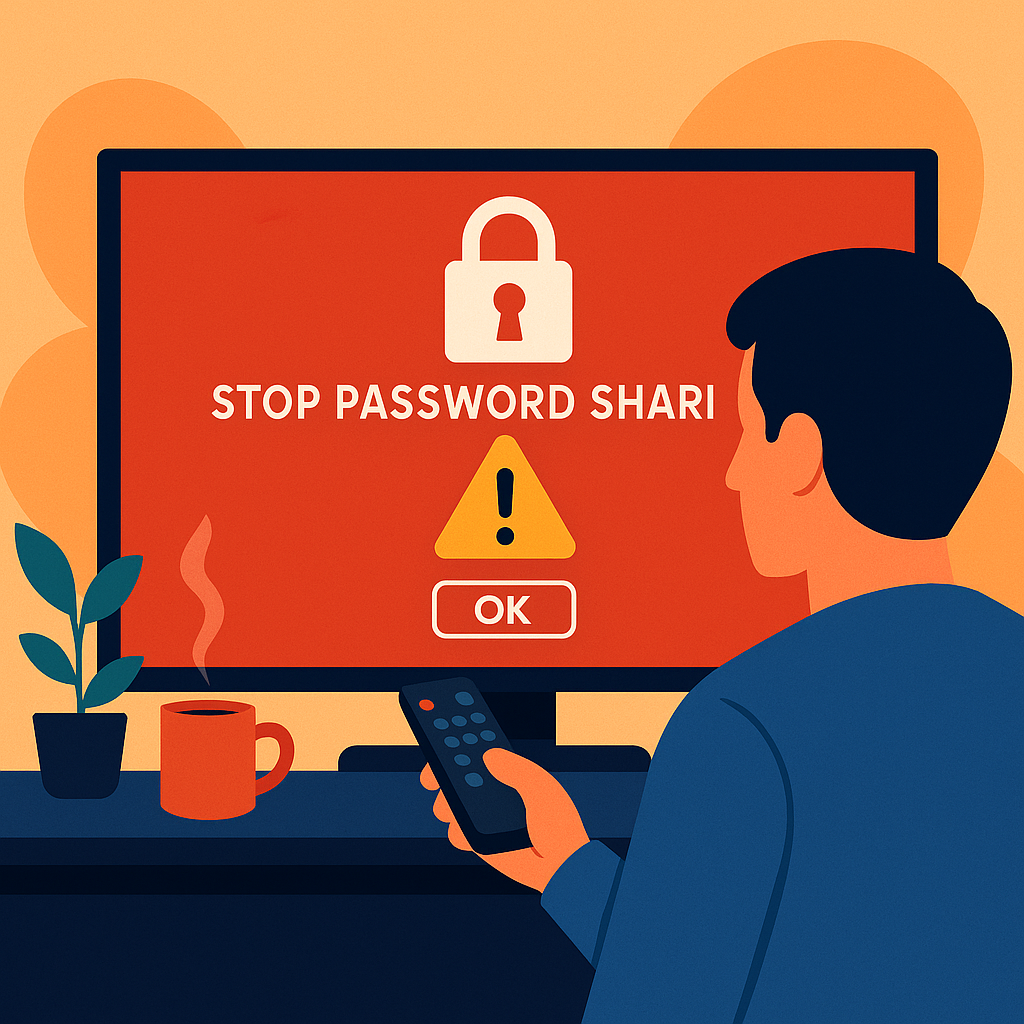
For over a decade, sharing streaming passwords has been an open secret—a digital-age equivalent of lending a friend your DVD collection. Parents shared with college kids, friends split costs, and extended families stretched single subscriptions across continents. But the party is officially over. Major streaming platforms are systematically dismantling password sharing, fundamentally reshaping how we consume and pay for digital entertainment.
The Numbers Behind the Crackdown
The financial stakes are staggering. Netflix alone estimated that over 100 million households worldwide were accessing its service through shared passwords—nearly half its paid subscriber base. For an industry collectively losing billions to password sharing, the crackdown represents not just policy enforcement but financial survival.
Disney+ reported that approximately one-third of its users were sharing passwords outside their households. With streaming platforms facing increased pressure from investors to prove profitability after years of growth-at-all-costs strategies, every shared password represents lost revenue they can no longer afford to ignore.
How Platforms Are Enforcing the New Rules
Netflix’s Pioneering Approach
Netflix led the charge with a sophisticated detection system that monitors IP addresses, device IDs, and account activity patterns. Users outside the primary household now face regular verification requests and eventual lockouts. The platform’s solution? Pay an additional fee to add “extra members” to your account—essentially legitimizing what was once free sharing for a monthly surcharge.
Disney+ and Hulu Follow Suit
Disney began its crackdown in earnest in 2024, implementing similar household verification systems. The company took a slightly different approach, offering a grace period for users to adjust while sending increasingly persistent notifications about their updated terms of service.
The Technical Infrastructure
These platforms employ complex algorithms that analyze viewing patterns, geographic data, and device fingerprints. When the system detects streaming from multiple locations simultaneously or irregular access patterns, it triggers verification protocols. Users might receive codes via email or text that must be entered to continue viewing—a minor inconvenience for legitimate users but a significant barrier for casual password sharers.
The User Backlash and Adaptation
Social media erupted with complaints when Netflix first rolled out its restrictions. Hashtags like #CancelNetflix trended globally, with users threatening a mass exodus. The reality proved different. Despite initial resistance, Netflix added nearly 6 million new subscribers in the quarter following its password-sharing crackdown, suggesting that many former password sharers converted to paying customers.
However, the crackdown has also driven innovation in workarounds. VPN usage has surged, and online forums buzz with tips for circumventing detection systems. Some families have restructured their viewing habits, consolidating watch parties or rotating who maintains active subscriptions.
The Economic Ripple Effects
For Consumers
The average American household now subscribes to four streaming services, spending approximately $61 monthly. The password-sharing crackdown could increase this by 20-30% for households that previously shared costs. This additional financial burden comes at a time when subscription fatigue is already setting in and inflation has stretched household budgets.
For the Industry
Early data suggests the crackdowns are working—at least financially. Netflix’s revenue jumped significantly post-crackdown, and other platforms are reporting similar gains. However, this short-term boost might come at the cost of long-term customer loyalty and market growth.
The crackdown has also accelerated “subscription hopping”—the practice of subscribing to a service for a month to watch specific content, then canceling. This behavior could ultimately prove more damaging to platforms than password sharing ever was.
The Broader Implications
Redefining Digital Ownership
The password-sharing crackdown raises fundamental questions about digital ownership and access. When we “buy” a subscription, what exactly are we purchasing? The platforms argue that it’s individual or household access, but consumers have long treated subscriptions as shareable resources, much like physical media.
Impact on Content Discovery
Password sharing wasn’t just about free access—it was a powerful discovery mechanism. Young adults using their parents’ accounts often became paying subscribers later. Friends introduced each other to new shows through shared access. By eliminating this organic growth channel, platforms might be sacrificing future audience development for immediate revenue gains.
The Family Problem
Modern families don’t fit neatly into streaming platforms’ definition of “household.” Children at college, elderly parents in assisted living, and families split across multiple homes due to divorce or work all challenge the traditional household model. Platforms are slowly acknowledging these realities with new pricing tiers, but solutions remain imperfect.
Looking Ahead: The Future of Streaming Access
As password-sharing restrictions become the norm, we’re likely to see continued evolution in how streaming services structure their offerings. Some predicted developments include:
Flexible Household Definitions: Platforms may introduce more nuanced account structures that better reflect modern living arrangements, possibly using family verification systems similar to those employed by music streaming services.
Bundling Renaissance: The crackdown might accelerate the return of bundling, with platforms offering grouped subscriptions at discounted rates—essentially recreating the cable packages streaming was supposed to replace.
Ad-Supported Alternatives: More platforms are likely to push users toward ad-supported tiers, offering lower prices in exchange for advertising exposure. This could become the default option for secondary users who previously relied on shared passwords.
Geographic Pricing Models: Some platforms might introduce location-based pricing that acknowledges economic disparities while preventing abuse through international password sharing.
The Bottom Line
The password-sharing crackdown represents a fundamental shift in the streaming economy. While platforms celebrate recovering lost revenue, the long-term consequences remain uncertain. Will consumers accept these new limitations, or will they seek alternatives—whether through piracy, reduced subscriptions, or new platforms that embrace sharing?
What’s clear is that the golden age of streaming—unlimited content at minimal cost through creative password sharing—has ended. The industry is maturing, and with that maturation comes the cold reality of economics. Platforms need to prove profitability, and password sharing has become an unaffordable luxury.
For consumers, this means adapting to a new reality where streaming might not be the budget-friendly alternative to cable it once was. The question isn’t whether the crackdown will succeed—early data suggests it already has—but whether the streaming industry can maintain its cultural dominance when it’s no longer quite so accessible.
As we navigate this transition, one thing is certain: the relationship between streaming platforms and their users has fundamentally changed. The trust and flexibility that characterized the early streaming era have given way to strict enforcement and maximum revenue extraction. Whether this evolution strengthens or ultimately undermines the streaming revolution remains to be seen.


















 and then