
Warner Bros. Discovery’s takeover battle is entering a more complicated phase. Some of the company’s biggest investors are now split over Paramount Skydance’s revised all-cash offer, even as the Warner Bros board continues to back Netflix’s proposed acquisition.
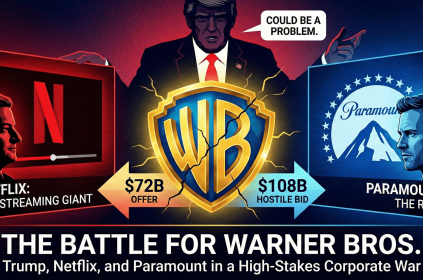
The development adds new pressure to a deal that Techuncode first covered in detail in our earlier report on Netflix’s Warner Bros deal and Paramount’s hostile bid, which outlined how competing bids had set up a high-stakes fight for control of the media giant.
Paramount’s Higher Offer Divides Shareholders
Paramount Skydance recently sweetened its bid, valuing Warner Bros. Discovery at roughly $108 billion and offering $30 per share in cash. That price is higher than Netflix’s earlier $27.75 per share proposal, immediately catching the attention of activist and value-focused investors.
According to Reuters, this has created a clear divide among major shareholders. Some investors believe Paramount’s higher cash offer delivers better short-term value and deserves serious consideration. Others argue that the risks attached to the deal outweigh the higher price.
Shareholders have until January 21 to decide whether to tender their shares under Paramount’s offer, setting a tight deadline for what could become a decisive moment.
Why the Warner Bros Board Still Backs Netflix
Despite the higher valuation, Warner Bros. Discovery’s board has rejected Paramount’s revised bid, calling it financially risky and uncertain.
The board’s main concern is debt. Paramount’s proposal would rely heavily on leverage, potentially leaving the combined company with close to $87 billion in debt. In contrast, Netflix’s offer is structured with clearer financing commitments and lower balance-sheet risk.
Netflix’s bid is also viewed internally as more predictable in terms of execution. While Paramount has offered guarantees, Warner Bros leadership maintains that Netflix’s proposal provides greater certainty of closing, a key factor for long-term shareholders.
Investors Disagree on Risk Versus Reward
The disagreement among investors reflects a broader question: Is a higher price worth higher risk?
Some institutional holders support Netflix’s deal because it prioritizes stability, reduced leverage, and long-term operational strength. Others believe Paramount’s all-cash bid is more straightforward and gives shareholders immediate value, even if it carries greater financial risk.
This split weakens Warner Bros’ negotiating position and increases pressure on its leadership to justify why a lower-priced deal is still considered superior.
What This Means for the Media Industry
This takeover battle is no longer just about Warner Bros. Discovery. It has become a test case for how media companies navigate consolidation in a streaming-dominated market.
Netflix is positioning itself as a disciplined acquirer focused on scale and financial control. Paramount, meanwhile, is pushing aggressively, betting that cash value and speed can win over shareholders.
As regulators, investors, and competitors watch closely, the outcome could reshape the balance of power across Hollywood and global streaming markets.
With the shareholder deadline approaching, the next few weeks will likely determine whether Warner Bros sticks with Netflix, opens talks with Paramount, or faces an even more contentious battle ahead.


















 and then