
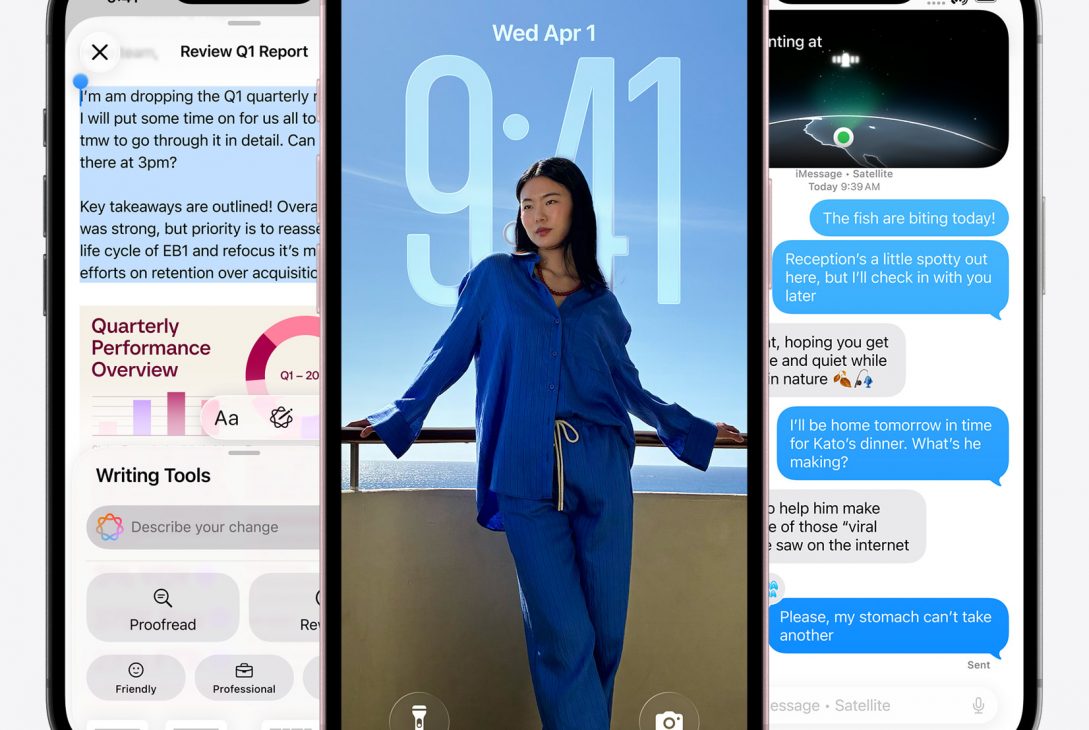
For years, the biggest complaint about Apple’s budget iPhone line was simple: no MagSafe. You could spend $599 and still not get the one feature that defines the modern iPhone charging experience. Apple finally heard the feedback. With the iPhone 17e, that changes.
Announced on March 2, 2026 and available for pre-order from March 4, the iPhone 17e is Apple’s most affordable iPhone in the current lineup. At $599, it comes with the same A19 chip powering the standard iPhone 17, a 48MP camera, 256GB of base storage, and yes, full MagSafe support. This is not a stripped-down product. It is a deliberate value play.
Here is everything you need to know.
What Is the iPhone 17e?
The iPhone 17e is Apple’s entry-level iPhone for 2026, sitting below the iPhone 17 ($799), iPhone Air ($999), and the Pro models. It replaces the iPhone 16e and fixes most of what held that device back. Think of it as the iPhone 17 with a few deliberate trade-offs made to hit a lower price, not a cheap phone with a premium sticker.
MagSafe: The Headline Feature
This is the big one. The iPhone 16e launched in 2025 without MagSafe, which felt like a strange omission given how central the magnetic ecosystem has become to the iPhone experience. Chargers, wallet mounts, car holders, battery packs — nearly every useful iPhone accessory in 2026 is built around MagSafe magnets.
The iPhone 17e supports 15W wireless charging via MagSafe and Qi2, up from 7.5W on the previous generation. It also includes the magnetic ring on the back, which means every MagSafe accessory in your drawer now works with Apple’s $599 phone. That alone makes this a more compelling purchase than its predecessor.
Specs at a Glance
Display: 6.1-inch Super Retina XDR OLED, 60Hz, 1200 nits peak HDR brightness, Ceramic Shield 2
Chip: Apple A19 (3nm), 6-core CPU, 4-core GPU, 16-core Neural Engine
RAM: 8GB
Storage: 256GB or 512GB
Camera: 48MP Fusion main camera, 4K Dolby Vision video, 2x optical-quality zoom
Modem: Apple C1X, up to 2x faster than C1 in iPhone 16e
Battery: Up to 26 hours video playback, 50% charge in 30 minutes (20W adapter)
Charging: 15W MagSafe/Qi2, USB-C wired
Build: Aerospace-grade aluminum, IP68 (6 metres, 30 minutes)
Colors: Black, White, Soft Pink
The A19 Chip: Flagship Power in a Budget Phone
Apple does not usually put its newest chip in the entry-level device. The iPhone 17e breaks that pattern. The A19 is built on 3-nanometer technology and is the same chip generation found across the entire iPhone 17 family. The only difference is a slight GPU reduction — the 17e has a 4-core GPU versus 5 cores on the standard iPhone 17 — but for everyday tasks, gaming, and running Apple Intelligence features, you will not notice it.
The 16-core Neural Engine is what enables on-device AI capabilities: Live Translation on calls and messages, Call Screening, Hold Assist, Writing Tools, and Visual Intelligence. If Apple Intelligence is your entry point into AI-powered smartphones, this is the cheapest door in.
Camera: One Lens, But It Does a Lot
The iPhone 17e runs a single 48MP Fusion camera on the back. There is no Ultra Wide lens, which is where Apple made its clearest budget trade-off. What you do get is a versatile sensor that can shoot at full 48MP resolution or default to 24MP for a balance of quality and file size.
The 2x zoom is optical quality, simulated from the full 48MP sensor rather than a dedicated telephoto lens — Apple calls it having two cameras in one. Portrait mode now recognises people, dogs, and cats and saves depth data, so you can turn a regular shot into a portrait after the fact. 4K Dolby Vision video at 60fps is also supported, which is not something you typically find on phones at this price.
What You Miss Compared to iPhone 17
The iPhone 17e is not the full iPhone 17. Here is what you give up at $599 vs $799: no Dynamic Island (you get the older notch), no 120Hz ProMotion display, no Ultra Wide camera, no 3,000-nit peak brightness, and a slightly smaller 6.1-inch screen versus the 17’s 6.3-inch panel. The front-facing camera is also not upgraded.
None of those are dealbreakers unless you specifically need them. For most buyers upgrading from an iPhone 11, 12, or 13, the 17e will feel like a massive leap forward in every area.
Price and Availability
The iPhone 17e starts at $599 for 256GB and $799 for 512GB. Pre-orders are open now. Units hit shelves on March 11, 2026, in over 70 countries. In Nigeria, pricing will vary by retailer but expect similar dollar-equivalent rates at authorized resellers.
Trade-in deals from Apple and major carriers typically bring the effective price down by $100 to $200, depending on your current device.
Should You Buy the iPhone 17e?
If you are on an iPhone 11 or older, the answer is yes without much debate. The performance gap is massive, the camera is significantly better, and you are getting MagSafe, Apple Intelligence, and satellite connectivity in a package that holds its value well.
If you are coming from a 16e, the upgrade is more about what was missing last year: MagSafe primarily, the faster modem, better scratch resistance, and slightly improved camera processing. Whether that justifies a new purchase depends on how much the MagSafe ecosystem matters to your setup.
Compared to Android alternatives in this price range — including the Google Pixel 10a — the 17e offers stronger long-term software support, tighter hardware-software integration, and now a competitive wireless charging standard. It is Apple’s most compelling value proposition in years.
iPhone 17e is available for pre-order now at apple.com, with availability starting March 11, 2026.


















 and then