
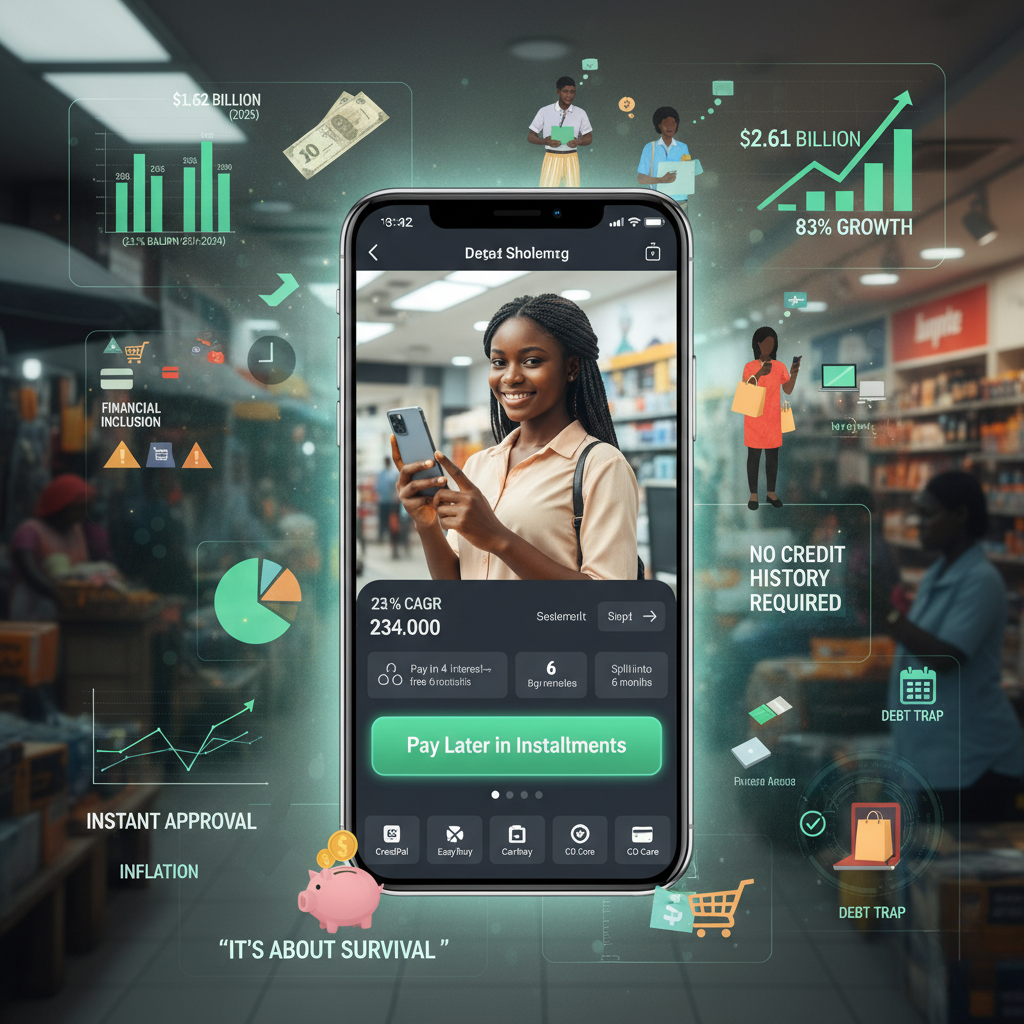
If you’ve been online shopping in Nigeria lately or walked into certain retail stores, you’ve probably noticed something different at checkout. That “Pay Later” option? It’s everywhere now. And it’s not just a trend anymore. Buy Now, Pay Later has become the new normal for how Nigerians shop, and it’s reshaping everything we thought we knew about credit and consumer spending.
The numbers are wild. Nigeria’s BNPL market hit $1.62 billion in 2025 and it’s projected to reach $2.61 billion by 2030. That’s an 83% jump in just five years. Between 2021 and 2024, this market grew at 23.1% annually. That’s not slow adoption, that’s mainstream acceptance.
What’s driving this shift? Simple. The economy. Inflation is eating into everyone’s pockets, and people’s salaries aren’t keeping up. Uchenna Uzo, a marketing professor at Lagos Business School, put it bluntly: Nigerians are getting poorer, so BNPL lets them pay when they actually have the money.
This isn’t about convenience anymore. For millions of Nigerians, it’s about survival.
How BNPL Actually Works
Here’s the deal with BNPL. You see something you want to buy, maybe it’s a phone, maybe it’s a laptop. You don’t have all the money right now, but you need it. BNPL steps in and says: take it home today, pay us back in chunks over the next few weeks or months.
Most platforms in Nigeria offer 30-day interest-free windows. Pay within that time, you pay zero extra. Miss that deadline? The interest and late fees start piling up. Some platforms let you stretch payments across 2 to 6 months, but that usually comes with interest.
The approval is instant. Download the app, fill in basic info, get approved in minutes. No long bank forms, no waiting weeks. It’s fast, it’s digital, and it’s designed for people who don’t have traditional credit histories.
That’s why it’s taken off. It meets people where they are.
From Cash Culture to Credit Normal
Nigeria has always been a cash-first society. Credit cards? Not really common. Bank loans? Too much stress, too many requirements. But BNPL changed that conversation entirely.
What we’re seeing now isn’t just a new payment option. It’s a complete mindset shift about credit, debt, and how to manage money.
Why Nigerians Are All In
Let’s be real about why BNPL exploded here. Over 100 million Nigerians live below the poverty line. Inflation hit 19.62% in May 2024. Food prices are up, transport costs are up, everything costs more while salaries stay the same or, in many cases, disappear completely.
People are in survival mode. When you’re trying to feed your family or get a phone for work but your salary doesn’t stretch that far anymore, BNPL becomes your bridge. It’s not about buying designer bags, it’s about buying necessities now and figuring out payment later.
This has created specific patterns. You see more people buying in smaller quantities, the whole “sachet economy” thing where you buy detergent in tiny packs instead of bulk because that’s what you can afford right now. Demand for smaller packages jumped 72% recently. That’s people adapting.
Also, over 70% of Nigerian consumers now shop on their phones. That makes BNPL integration super easy. You’re already buying online, so clicking “Pay Later” at checkout? It’s just one more tap. No extra apps, no complexity.
Who’s Actually Using BNPL
The data shows clear patterns. Young people, especially millennials and Gen Z, dominate BNPL usage. Nigeria’s median age is 18.3 years. These are digital natives who grew up with fintech solutions and don’t see credit the way older generations do.
Low to middle-income earners make up the bulk of users. Research shows people using BNPL spend about 6.42% more than those paying upfront. They’re not reckless, they’re just able to access products they genuinely need but couldn’t afford all at once.
Urban areas like Lagos, Abuja, Port Harcourt see the most action, but it’s slowly spreading to smaller cities and rural areas where formal banking never really reached anyway.
The Players Making BNPL Standard
A few companies have basically owned this space and made BNPL the default shopping option for millions of Nigerians.
CredPal is probably the biggest name right now. They’ve partnered with over 13,000 merchants, including heavy hitters like Shoprite, Slot, and Bukka Hut. You can pay within 30 days interest-free or stretch it over 2-6 months. They even throw in cashback and discounts. Their partnership with Jumia in 2024 put them in front of millions more shoppers.
Easybuy went all in on phones and electronics. Smart move, considering how essential smartphones are now. They also partnered with Jumia, so if you’re buying a phone online in Nigeria, chances are you’ve seen their BNPL option.
Carbon Zero focuses on electronics and home appliances with a zero-interest model that’s attracted a loyal following. They work with various merchants nationwide, making big purchases feel more accessible.
CD Care has carved out its own space in the BNPL market, offering flexible payment solutions that let consumers spread purchases across manageable installments. They’ve built a solid reputation for reliability and customer service in a market where trust matters.
These platforms didn’t just offer a service, they changed the game. They made “pay later” normal.
BNPL Is Spreading Beyond Shopping
Here’s where it gets interesting. BNPL started with online shopping and electronics, but now it’s everywhere. Transportation? Pay later for your ride. Utilities? Split your electricity bill. Healthcare? Pay for medical services in installments. Education? Spread tuition payments over months.
This isn’t niche anymore. BNPL is becoming standard across Nigeria’s economy, and that’s pushing financial inclusion in ways traditional banks never could.
The Partnership Game
BNPL companies figured out early that partnerships were the key to mass adoption. Instead of trying to build everything from scratch, they integrated with platforms people already use.
Jumia’s partnerships with Easybuy and CredPal are the perfect example. Jumia already had millions of users. By adding BNPL at checkout, they made it seamless. Shoppers don’t need a new app or complicated setup, it’s just there, ready to use.
For merchants, BNPL is a no-brainer. Average order values go up. Cart abandonment drops. Price-sensitive customers who would’ve walked away end up buying because payment is manageable.
For BNPL providers, partnering with established platforms gives instant access to massive customer bases without spending years building trust.
For consumers, more options everywhere they shop. That’s how BNPL became normal so fast.
Regulation Is Catching Up
As BNPL grew massive, regulators started paying attention. The Central Bank of Nigeria introduced stricter guidelines for digital lenders, including BNPL platforms. The goal? Protect consumers and prevent people from drowning in debt they can’t handle.
The new rules cover a few key areas. Consumer protection measures that stop predatory lending. Responsible lending requirements so providers actually check if borrowers can repay. Better data reporting standards, potentially integrating with credit bureaus so lenders can see if someone already has multiple loans. Plus tax incentives for fintech infrastructure to keep innovation moving.
It’s a balancing act. Too much regulation could slow down growth. Too little? People get exploited. Right now, regulators are trying to find that middle ground where BNPL can thrive without becoming a debt trap for millions.
Why People Are Hooked on BNPL
The benefits are obvious once you see them in action.
You get purchasing power you didn’t have before. That phone you need for work? You can get it today instead of saving for six months. The laptop for your side hustle? Same thing. BNPL turns “I can’t afford this right now” into “I can start paying for this today.”
Financial flexibility matters when your salary comes irregularly or unexpected expenses hit. Breaking a big payment into smaller chunks helps you manage cash flow without destroying your budget.
Building credit history is huge. Most Nigerians don’t have traditional credit scores. Using BNPL responsibly creates a positive payment record that could open doors to better financial services later.
No collateral needed. Traditional loans want property, guarantors, extensive paperwork. BNPL? Just sign up, get approved, start buying. That’s massive for people who’ve been shut out of traditional finance.
And speed. Everything happens fast. Instant approvals, seamless checkout, no waiting around. It matches how people expect digital services to work now.
But There Are Real Problems
Let’s not pretend everything is perfect. BNPL has serious issues that need addressing.
The debt trap is real. People can take out multiple BNPL loans from different platforms. Since most platforms don’t talk to each other, nobody knows your total debt. You could owe money to five different services and each one thinks you only owe them. That’s “phantom debt,” and it’s dangerous.
Default rates are climbing. 42% of BNPL users made at least one late payment recently. That’s not a small number. It means almost half of users are struggling to keep up.
Debt collection tactics are getting complaints. Some borrowers report aggressive recovery methods, harassment, public shaming. One person in Lagos bought a phone for N82,000, defaulted on payments, and ended up paying N63,000 on top of the original N52,000 balance. That’s a 21% penalty. These stories aren’t rare.
Hidden costs catch people off guard. The “zero interest” marketing sounds great until you miss a payment and see the late fees. Many users don’t fully understand the terms they’re agreeing to, especially around penalties and repayment schedules.
This isn’t to scare people away from BNPL. It’s to be real about what’s happening. The service works when used responsibly, but it can spiral fast when it’s not.
What’s Next for BNPL in Nigeria
The market is projected to keep growing at 10% annually through 2030. That growth brings changes.
More competition is coming. New players will target specific niches like education financing or SME support. Existing platforms will diversify, offering more customized products for different customer segments.
Expect BNPL to reach more people. Rural markets and lower-income demographics that have been underserved will get more attention as platforms look for growth.
Technology will get smarter. AI-driven credit assessment, personalized repayment terms, better fraud detection, all of that is coming. The experience will get more seamless, approvals faster, integration tighter.
Regulation will mature. Mandatory credit bureau reporting is likely, which would solve the phantom debt problem. Clearer consumer protection requirements across all platforms. Standard guidelines on debt recovery practices. Financial literacy requirements before approval.
And BNPL will merge deeper into Nigeria’s digital financial ecosystem. Integration with mobile money platforms, traditional banks via APIs, potentially crypto and blockchain payment solutions, even government payment systems for utilities and taxes.
BNPL isn’t a standalone thing anymore. It’s becoming part of the infrastructure.
How to Use BNPL Without Getting Burned
Look, BNPL works if you’re smart about it. Here’s how to stay safe:
Only buy what you can actually afford. Don’t use BNPL for things you couldn’t afford even with the payment plan. If the installments will strain your budget, you’re setting yourself up to default.
Read everything before you click agree. Know the fees. Know the penalties. Know exactly when payments are due and what happens if you miss one. Those terms matter.
Don’t take multiple loans at once. Just because you can doesn’t mean you should. Taking BNPL loans from three different platforms simultaneously is how you end up drowning in payments you can’t track.
Set payment reminders. Miss a payment by one day and the fees start stacking. Set alerts, automate if possible, do whatever it takes to pay on time.
Use it to build your financial profile. Paying on time consistently creates a positive record. That could help you access better financial services later, like actual bank loans with lower interest rates.
BNPL isn’t the enemy. Poor planning is.
BNPL Is Here to Stay
Buy Now, Pay Later isn’t a trend that’s going to fade. It’s not experimental fintech anymore. It’s how millions of Nigerians shop now. It’s standard. It’s expected. It’s the new normal.
The $2.61 billion projection by 2030 isn’t optimistic forecasting, it’s what happens when a financial solution actually solves real problems for real people. When salaries don’t stretch far enough, when inflation keeps climbing, when traditional banks don’t serve you, you find alternatives. BNPL became that alternative.
This shift goes beyond payment methods. It’s changing how an entire generation thinks about credit, how businesses approach sales, how the financial system accommodates people who were previously excluded.
The question now isn’t whether BNPL will stick around. It will. The question is whether everyone involved, consumers, companies, regulators, can manage this growth responsibly. Can we make BNPL a tool for financial inclusion without it becoming another debt trap?
That balance will determine everything.
For now, one thing is clear: if you’re shopping in Nigeria and you don’t see a “Pay Later” option, that’s the exception, not the rule. BNPL is the new normal, and it’s reshaping how Africa’s largest economy does business.
Market data from ResearchAndMarkets.com, EnterpriseNGR State of Enterprise 2025 Report, and industry research conducted in 2024-2025.


















 and then