
Released in February 2026, the new Opus and Sonnet models — plus massive ecosystem upgrades — turn Claude into a true AI teammate that plans, codes, analyzes, and executes across your entire workflow.
Just three weeks into 2026, Anthropic dropped two major model updates that are already changing how developers, analysts, and enterprises get work done. On February 5 came Claude Opus 4.6, the new flagship. On February 17 followed Claude Sonnet 4.6, now the default model for free and Pro users. Both bring a 1 million-token context window in beta (the first time Opus-class models have reached this scale), smarter long-horizon reasoning, and deeper integration into real tools like Excel, PowerPoint, and your desktop.
Here’s a clear, no-hype breakdown of what’s actually new and why it matters.
1. The New Models at a Glance
| Model | Best For | Context (beta) | Output Tokens | Pricing (input/output per M tokens) | Default On |
|---|---|---|---|---|---|
| Opus 4.6 | Complex agentic tasks, deep coding, finance/legal, large codebases | 1M | 128K | $5 / $25 | Pro/Max/Enterprise |
| Sonnet 4.6 | Everyday coding, computer use, design, knowledge work | 1M | 64K | $3 / $15 | Free + Pro |
Opus 4.6 is the smartest Claude yet. It plans more carefully, sustains multi-hour agentic tasks, works reliably in million-line codebases, and catches its own mistakes during code review and debugging. It leads (or ties for first) on Terminal-Bench 2.0 (agentic coding), Humanity’s Last Exam, GDPval-AA (beats GPT-5.2 by ~144 Elo points), and BrowseComp.
Sonnet 4.6 is the surprise star for most users. Early-access developers preferred it over Sonnet 4.5 and even Opus 4.5 in many real-world scenarios — better consistency, fewer hallucinations, stronger instruction following, and dramatically improved computer-use skills (now human-level on many OSWorld tasks like filling multi-tab forms or navigating spreadsheets).
2. 1 Million Tokens + Smarter Thinking = Actually Useful Long Tasks
Both models now support 1M-token context in beta on the Developer Platform (200K is the standard limit). That’s enough for:
- Entire multi-million-line codebases
- Dozens of research papers or full quarterly financial reports
- Months of Slack/Email threads
New developer controls make it practical:
- Adaptive Thinking — the model decides how deeply to reason based on the task (no more manual “think step-by-step” prompts).
- Effort controls (low / medium / high / max) — dial intelligence vs speed/cost.
- Context Compaction (beta) — automatically summarizes old messages so conversations can run for days without hitting limits.
- Fast Mode (Opus only, beta) — up to 2.5× faster output at a premium.
3. Agent Teams & Computer Use Go Mainstream
Claude can now assemble agent teams inside Claude Code (research preview). One agent plans, another codes, a third reviews security, a fourth writes tests — all collaborating in parallel.
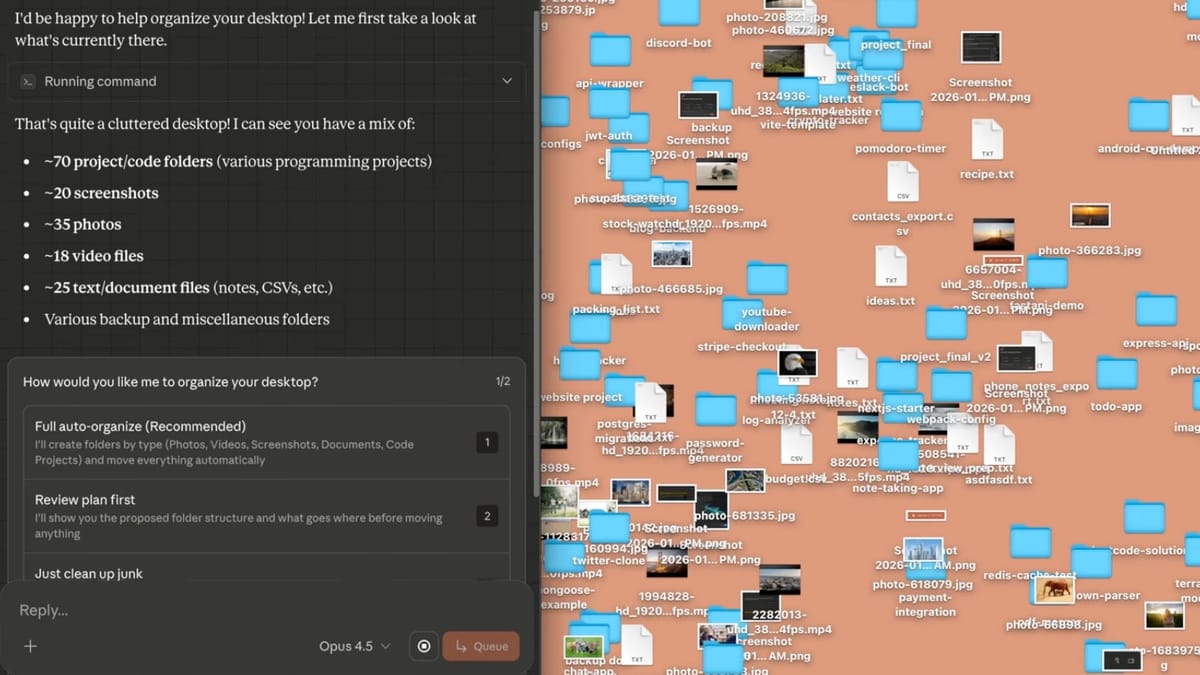
Computer-use capabilities got another huge boost with today’s (Feb 25) acquisition of Vercept. Claude can now reliably:
- Navigate complex desktop apps
- Fill multi-step web forms across tabs
- Edit spreadsheets with unstructured data
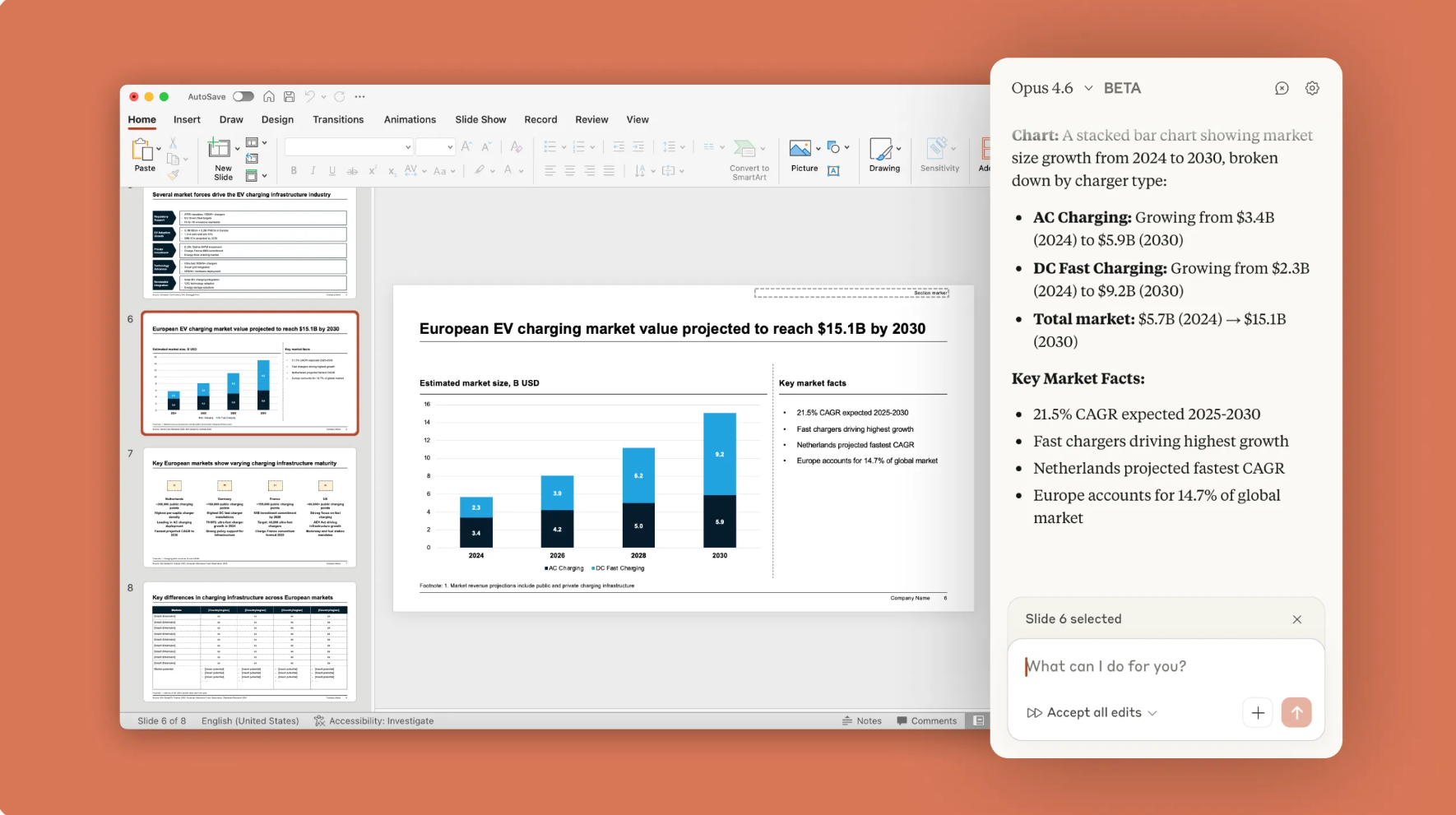
- Generate on-brand PowerPoint decks from raw notes or data
Claude in PowerPoint launched in research preview (Max/Team/Enterprise). Feed it data or a description and it creates visually polished, on-brand slides with charts, animations, and speaker notes.
Claude in Excel got major upgrades: plans before acting, handles long-running tasks, ingests messy data, and performs multi-step transformations in one pass.
4. Claude Cowork — Your AI Colleague for Knowledge Work
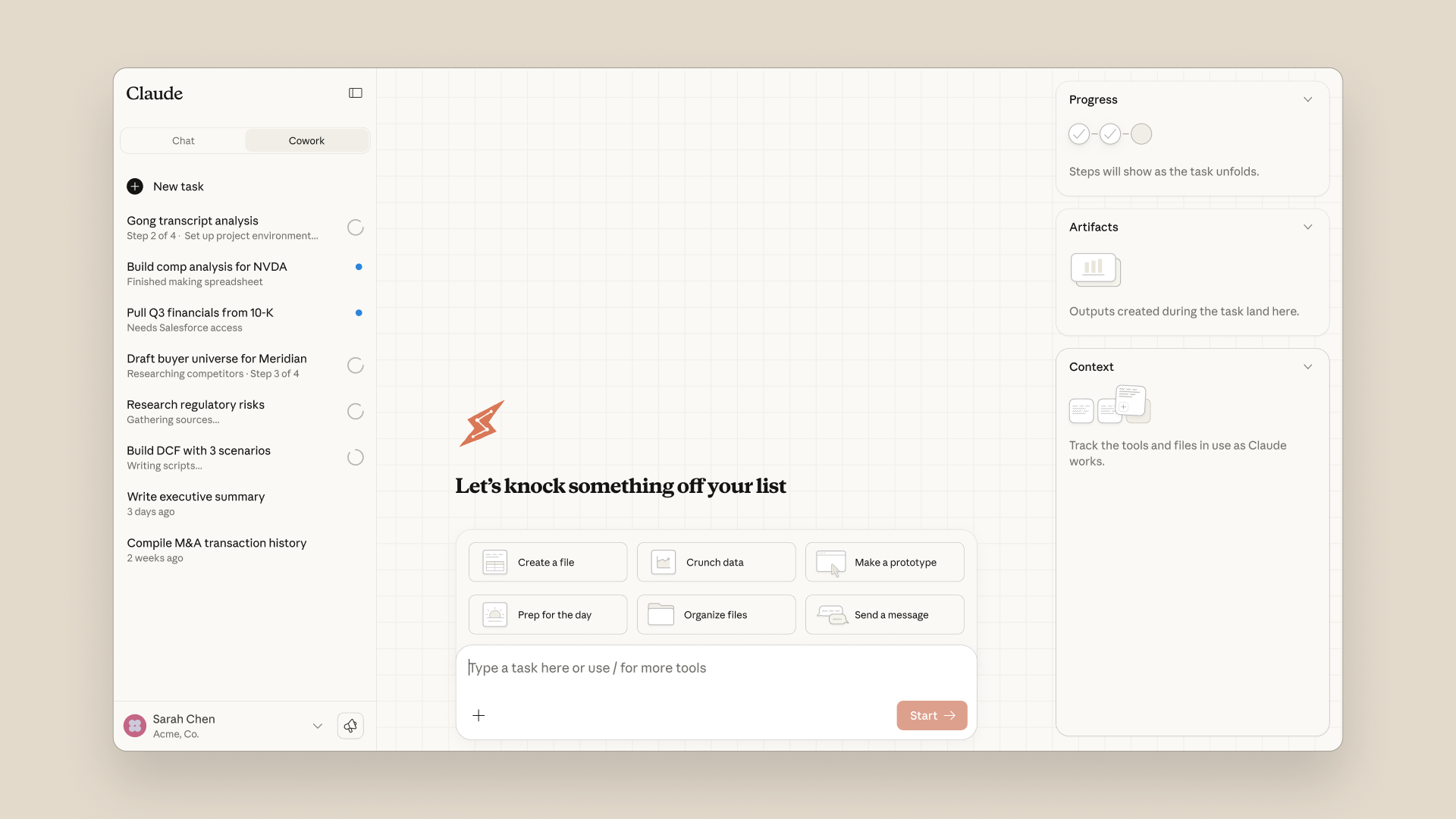
Claude Cowork (the non-technical sibling of Claude Code) is now production-ready with:
- Department-specific plugin templates: HR, Design, Engineering, Operations, Financial Analysis, Investment Banking, Private Equity, Wealth Management.
- Private plugin marketplaces — enterprises can build and share internal plugins.
- MCP connectors to Google Drive, Gmail, Calendar, DocuSign, Apollo, Clay, Outreach, SimilarWeb, MSCI, LegalZoom, FactSet, WordPress, Harvey, and more.
- Seamless handoff between Cowork, Excel, and PowerPoint — context travels with you.
In practice: ask Claude Cowork to “prepare my Q4 investor update” and it can pull data from Drive, analyze in Excel, generate charts, build the deck in PowerPoint, and draft the email — all autonomously while you focus on strategy.

5. Coding & Security Just Leveled Up
- Claude Code Security (released Feb 20) scans codebases for vulnerabilities and suggests patches. Opus 4.6 found 500+ zero-days in real customer repos.
- Agent teams + 1M context = autonomous refactoring of massive legacy systems.
- Better frontend code, iOS/Swift, architecture decisions, and spec compliance.
6. Pricing, Availability & How to Start Today
- Sonnet 4.6 is free (with file uploads, connectors, skills, and compaction).
- Opus 4.6 is available on Pro ($20/mo), Max, Team, and Enterprise plans.
- API pricing unchanged for base usage; 1M context and Fast Mode carry premium rates.
- Available on claude.ai, Claude apps, API, AWS Bedrock, Google Vertex AI, and all major clouds.
7. Safety First — Still Anthropic’s Superpower
Both models maintain (or improve) Claude’s industry-leading safety profile: low over-refusals, strong resistance to prompt injection, minimal sycophancy or deception. Anthropic also released Responsible Scaling Policy v3.0 and new research on preventing model distillation attacks this month.
Bottom Line: Claude Is Becoming the Thinking Partner We’ve Been Promised
Whether you’re a solo developer closing tickets 3× faster, a financial analyst turning raw data into board-ready decks in minutes, or an enterprise building internal AI agents that actually ship to production — Claude 4.6 feels less like a chatbot and more like a highly capable colleague that never sleeps.
Ready to try it? Head to claude.ai, switch to Sonnet 4.6 (or upgrade for Opus), and type something ambitious. The era of “AI that drafts” is over. The era of “AI that delivers” just started.
What do you want to build first? Drop your ideas below — let’s brainstorm how Claude 4.6 can help turn them into reality. 🚀
(All benchmarks, features, and dates pulled directly from Anthropic’s official announcements as of February 25, 2026.)
















 and then