
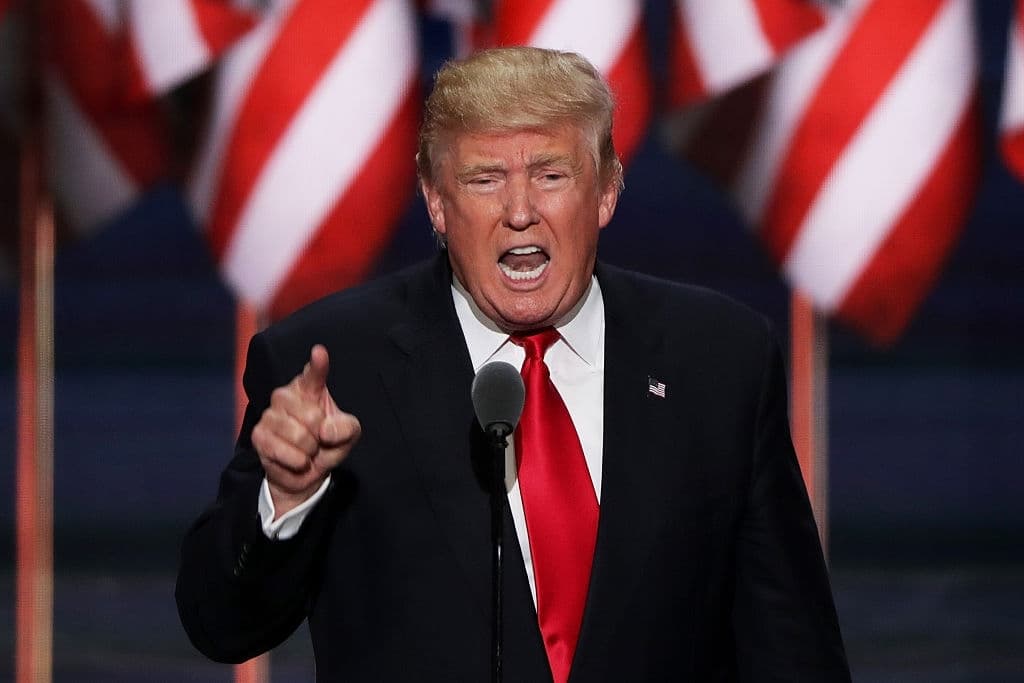
Donald Trump
The United States Federal Bureau of Investigation (FBI) has launched a manhunt for a Nigerian national accused of defrauding the Trump 2025 Presidential Inaugural Committee of over $460,000 in cryptocurrency as reported by the peoplesgazzete
The suspect, identified as Ehiremen Aigbokhan, allegedly orchestrated an elaborate business email compromise (BEC) scheme that tricked a donor into transferring 250,300 USDT. This cryptocurrency transaction was equivalent to over ₦400 million and was falsely presented as a legitimate donation to the Trump–Vance inaugural campaign.
How the Scam Was Executed
According to FBI court filings, Aigbokhan and his syndicate registered a deceptive domain: t47lnaugural.com. The domain closely resembled the official t47inaugural.com address used by the Trump–Vance Presidential Inaugural Committee. The fake address used a lowercase “L” in place of an uppercase “I”, a subtle difference that was easy to miss.
An email was sent on December 26, 2024, pretending to originate from a co-chair of the committee and requested a large crypto donation. A donor, believing the email to be authentic, proceeded to transfer the funds without suspicion.
FBI Investigation and Legal Action
After tracing the digital wallet transaction, the FBI filed a civil forfeiture complaint in a U.S. District Court to recover the stolen funds. Investigators linked the crypto wallet and exchange account directly to Aigbokhan, who is believed to be residing in Lagos, Nigeria.
A federal arrest warrant has been issued against him. He faces charges of wire fraud, money laundering, and conspiracy to commit fraud. The FBI stated it is collaborating with Nigerian law enforcement agencies to track down and extradite the suspect.
Rising Threat of Business Email Compromise (BEC)
This case highlights the growing threat of BEC scams. These attacks rely on impersonation, domain spoofing, and social engineering tactics to deceive individuals and organizations. In 2023 alone, the FBI’s Internet Crime Complaint Center (IC3) reported over $2.7 billion in BEC-related losses in the United States.
Political Fallout and Cybersecurity Concerns
Though the Trump–Vance committee’s official systems were not hacked, this scam raises serious concerns about the cybersecurity practices of political fundraising campaigns. Experts are urging political entities to adopt stronger email authentication, use multi-factor verification for financial requests, and educate staff and donors about potential red flags.
Nigeria’s Role in Global Cybercrime
Nigeria remains under global scrutiny for hosting some of the most prolific cybercriminal groups. While agencies such as the Economic and Financial Crimes Commission (EFCC) have intensified efforts against “Yahoo Yahoo” schemes, cross-border enforcement remains challenging.
Interpol and the FBI have previously worked with Nigerian authorities to bring cybercriminals to justice. It is yet to be seen whether this case will result in extradition or a domestic trial.
Key Facts at a Glance
| Element | Details |
|---|---|
| Suspect | Ehiremen Aigbokhan (Nigeria) |
| Allegation | Defrauding Trump Inauguration Fund via BEC scam |
| Amount Stolen | 250,300 USDT (≈ $460,000 / ₦400 million) |
| Method | The spoofed domain used to impersonate Trump campaign official |
| FBI Action | Civil forfeiture complaint and arrest warrant |
| Status | Suspect remains at large in Nigeria |
Conclusion
The FBI’s pursuit of Aigbokhan is a clear reminder of how political, financial, and cyber worlds are increasingly interconnected. As digital fraud continues to evolve, organizations must remain vigilant. Verifying sender identities and transaction authenticity can help prevent major losses, especially in high-stakes contexts like presidential campaigns.


















 and then