
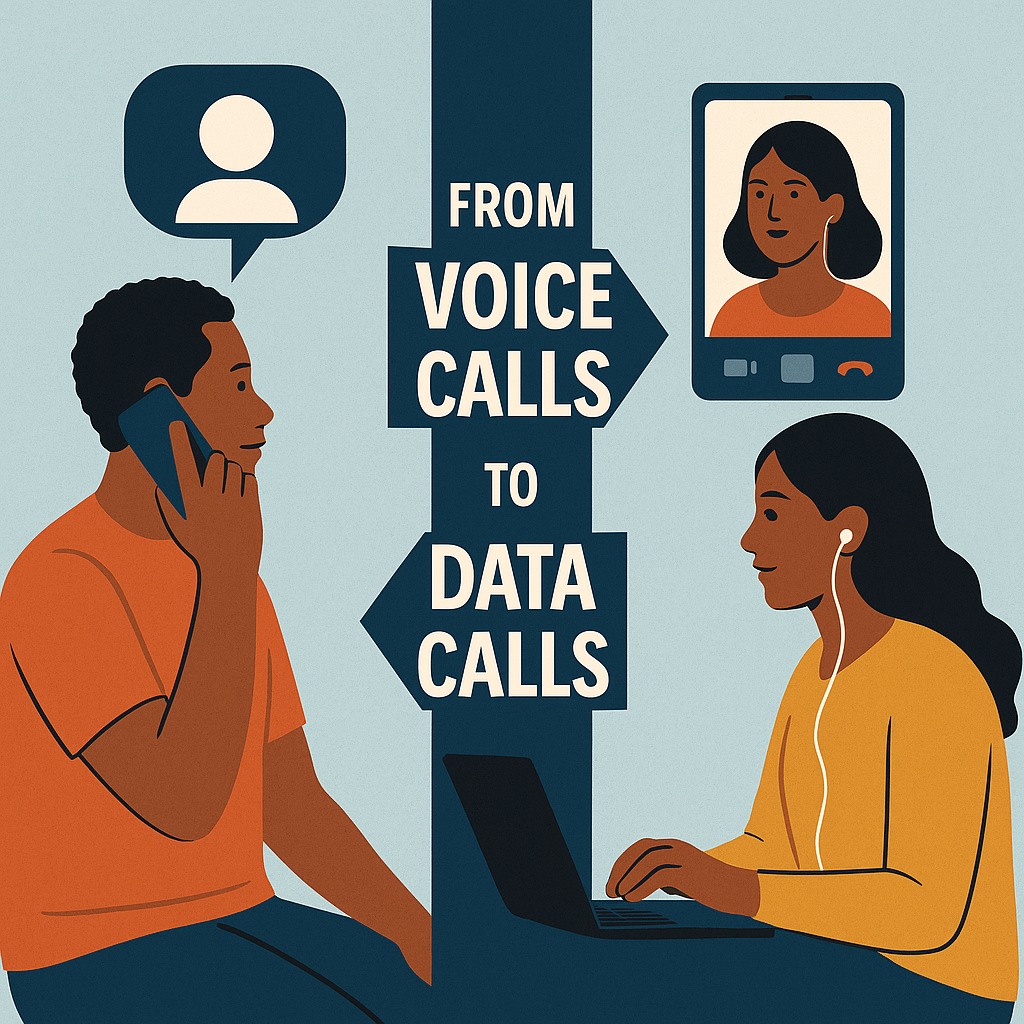
Nigeria’s telecommunications landscape is undergoing a significant transformation. With over 172 million active mobile lines and a teledensity of 79.67% as of March 2025, the country boasts one of Africa’s most vibrant mobile markets. However, recent trends indicate a shift in user preferences from traditional voice calls to data-driven communication methods. This evolution is reshaping the dynamics of mobile usage across the nation.
Subscriber and Internet Statistics
According to the Nigerian Communications Commission (NCC), active voice subscriptions experienced a decline in early 2024. In Q1 2024, the total number of active voice subscribers was 219.3 million, down from 226.2 million in Q1 2023, indicating a year-on-year decrease of 3.03%.
Conversely, data subscriptions have been on the rise. Active internet subscribers increased from 157.6 million in Q1 2023 to 164.4 million in Q1 2024, reflecting a growth rate of 4.33%. By January 2025, mobile internet subscriptions reached 141.7 million, with broadband subscriptions accounting for 98.88 million.
Data consumption patterns further underscore this shift. In January 2025, internet data usage peaked at over 1 million terabytes. Although there was a 12% decline in February, usage rebounded by 11.5% in March, reaching approximately 996,000 terabytes.
User Behavior and Preferences
The proliferation of messaging and video conferencing applications such as WhatsApp and Zoom has significantly influenced communication habits. These platforms offer cost-effective and versatile alternatives to traditional voice calls, catering to the needs of a digitally savvy population.
Demographically, younger Nigerians, particularly those aged 18 to 35, are at the forefront of this transition. Urban centers like Lagos, Abuja, and Port Harcourt exhibit higher data usage rates, attributed to better infrastructure and greater access to digital services. In Q1 2024, Lagos State recorded the highest number of active internet subscribers at 18.8 million, followed by Ogun and Kano States.
Impact of Telecommunications Infrastructure
Advancements in telecommunications infrastructure have been pivotal in facilitating the shift towards data-centric services. The rollout of 4G and 5G networks has enhanced internet speeds and reliability, making data services more accessible and appealing. As of early 2025, broadband penetration stood at 45.61%, reflecting ongoing efforts to expand high-speed internet access.
Initiatives like the National Broadband Plan (NBP 2020–2025) aim to achieve 70% broadband penetration and 90% population coverage by 2025. Collaborations between the government and private sector entities are instrumental in bridging connectivity gaps, especially in underserved regions.
Economic and Social Factor
Economic considerations play a significant role in the evolving communication landscape. Data plans often provide more value for money compared to traditional voice call tariffs, influencing users to favor data-based communication methods. However, a 50% tariff hike on voice, data, and SMS services in January 2025 led to a temporary decline in internet users and data consumption, highlighting the sensitivity of users to pricing changes. The rise of remote work, online education, and digital entertainment, have further accelerated the adoption of data services. The COVID-19 pandemic underscored the importance of reliable internet connectivity, prompting increased reliance on digital platforms for daily life.
Future Outlook
The trajectory suggests a continued shift towards data-driven communication in Nigeria. As infrastructure improves and digital literacy expands, more users are expected to adopt data-centric services. Telecom providers may need to adapt their business models, focusing on data offerings and value-added services to meet evolving consumer demands.
Policymakers and stakeholders must prioritize investments in infrastructure, affordability, and digital inclusion to sustain this growth. Achieving the targets set by the National Broadband Plan will be crucial in positioning Nigeria as a digitally empowered nation.
Conclusion
Nigeria’s mobile communication landscape is undergoing a paradigm shift from voice to data services. Driven by technological advancements, economic factors, and changing user preferences, this transition presents both opportunities and challenges. For consumers, it offers enhanced connectivity and access to a plethora of digital services. For telecom operators and policymakers, it necessitates strategic planning and investment to harness the full potential of a data-driven future.


















 and then