

Nigeria’s decision to investigate Temu is more than a regulatory update. It signals a turning point in how the country is approaching global tech platforms operating inside its digital economy. For years, international companies expanded quickly across Nigerian markets, prioritizing user growth and aggressive pricing while regulators largely observed from the sidelines. That dynamic appears to be shifting. The latest probe suggests Nigeria is beginning to redefine what accountability looks like in a data-driven era.
An official memo from the Nigeria Data Protection Commission (NDPC) confirms that the investigation focuses on how Temu collects, processes, and transfers Nigerian users’ personal data under the Nigeria Data Protection Act (NDPA) 2023. The commission raised concerns about transparency, cross-border data handling, and platform accountability. The tone of the memo signals a more assertive phase of enforcement, one that extends beyond routine compliance checks.
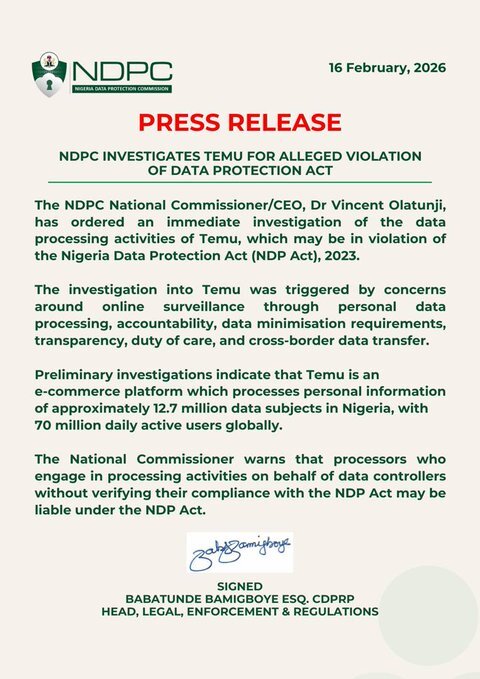
This framing changes the narrative. The issue is no longer just about one e-commerce platform. It is about how much digital influence foreign companies should hold in a rapidly growing market.
The Real Issue Is Power
On the surface, the investigation revolves around privacy rules. Beneath that legal framing sits a larger question of digital power. Data has become one of the most valuable resources in modern technology, shaping pricing models, recommendation engines, advertising systems, and long-term competitive advantages. Platforms that control massive user datasets often gain leverage that extends far beyond retail transactions.
Temu’s growth in Nigeria has been driven by ultra-low pricing, mobile-first experiences, and heavy promotional campaigns that quickly attracted millions of users. Each interaction generates behavioral data that feeds into broader analytics systems. Regulators appear increasingly aware that allowing unrestricted data accumulation could reshape market dynamics in ways that disadvantage local players.
The NDPC memo therefore reads less like a warning about privacy alone and more like an attempt to establish boundaries around digital dominance.
A Digital Economy Growing Faster Than Its Guardrails
Nigeria is one of Africa’s largest internet markets, with a young population rapidly adopting mobile commerce. That growth has made the country attractive to global platforms eager to scale quickly. Yet regulatory frameworks have struggled to keep pace with the speed of innovation. Policy often trails behind technology, leaving gaps that only become visible once platforms achieve significant scale.
By launching an investigation now, regulators seem to be moving from reactive enforcement toward proactive oversight. The emphasis on data governance and cross-border transfers suggests Nigeria is trying to avoid the regulatory delays seen in other regions where platforms expanded faster than legal frameworks could adapt.
For local startups, this shift could create a more balanced competitive environment. Stronger compliance expectations may force global entrants to localize operations instead of relying solely on centralized international infrastructure.
Why Temu Became the Flashpoint
Temu’s business model places it directly at the intersection of data, logistics, and algorithmic pricing. The platform relies heavily on analytics to optimize supply chains, personalize user experiences, and maintain its aggressive pricing structure. These same strengths also attract scrutiny, especially in markets where data sovereignty is becoming a policy priority.
Unlike traditional marketplaces that expanded gradually, Temu entered Nigeria with rapid adoption strategies that amplified its visibility. Fast growth tends to invite regulatory attention, and the NDPC’s memo reflects concerns that scale should not outpace accountability.
The investigation may shape how future platforms approach the Nigerian market. Companies may need to rethink onboarding processes, data transparency, and compliance structures long before they achieve mass adoption.
A Message to Global Tech Platforms
Nigeria’s actions mirror broader global trends. Regulators across Europe and Asia have shifted focus toward how platforms collect and monetize data, not just what content appears on their services. The NDPC’s approach suggests Nigeria is positioning itself within that global conversation while adapting enforcement to local realities.
For international tech companies, the message is increasingly clear. Expansion into emerging markets now comes with higher expectations around governance and transparency. Data practices that once received little scrutiny are becoming central to regulatory discussions.
The Risk of Overcorrection
Stronger enforcement can protect consumers, but it also carries risks. If regulations become unpredictable or overly restrictive, companies may slow investment or delay new market entries. Nigeria faces a delicate balance between safeguarding user rights and maintaining an environment that encourages innovation.
The long-term impact of the probe will depend on how regulators communicate expectations and enforce policies. The NDPC memo establishes a foundation, but clarity and consistency will determine whether the move strengthens confidence or introduces uncertainty.
The Bigger Picture: Data Sovereignty Is Becoming Central
The Temu investigation highlights a broader shift taking place across African tech ecosystems. Governments are beginning to assert more control over how digital platforms operate within their borders. Instead of acting as passive markets for global technology, countries like Nigeria are shaping the rules that define the digital economy.
For local founders, this could open new opportunities as stronger governance narrows the structural advantages held by global platforms. For consumers, it may translate into clearer transparency around how personal data is handled.
Whether the investigation leads to penalties or policy adjustments, its symbolic impact is already significant. Nigeria is signaling that digital growth must coexist with responsibility. The era of unchecked expansion may be giving way to a more balanced model where innovation and accountability evolve together.






















 and then