
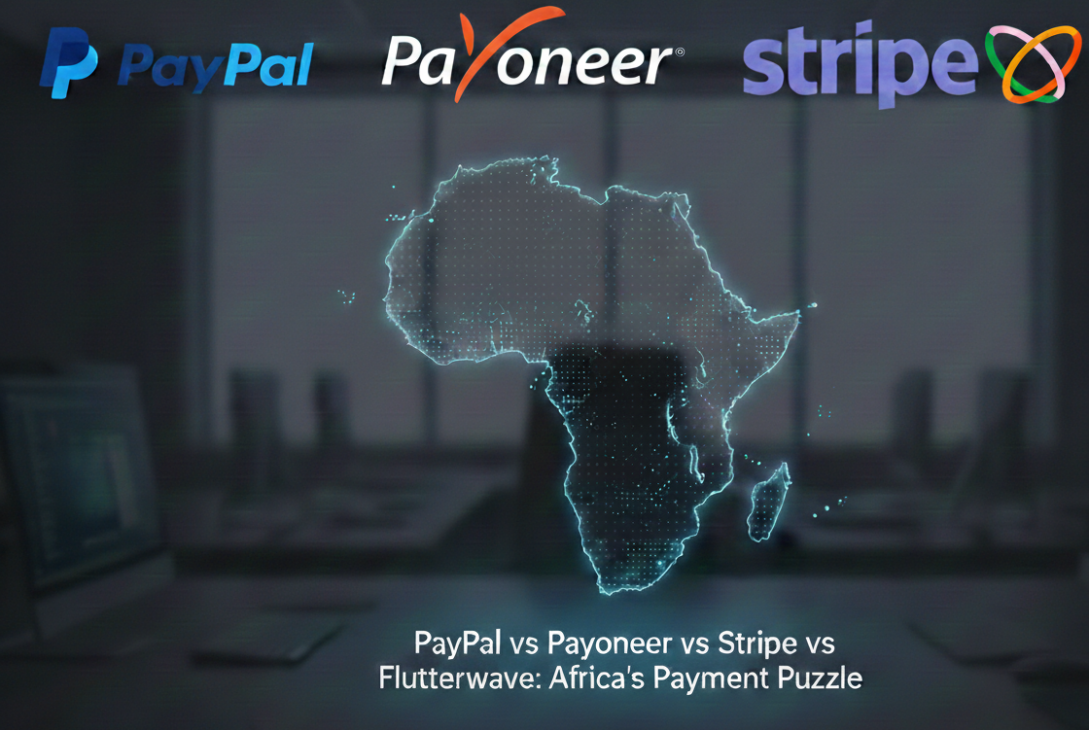
Getting paid internationally has always been one of the hardest parts of doing business from Africa. Talent has never been the issue. Payment access has.
With PayPal now usable in Nigeria through Paga, the conversation has shifted again. Nigerians now have more options than ever, but each platform comes with trade-offs. PayPal, Payoneer, Stripe, and Flutterwave all solve different problems, and choosing the wrong one can cost you time, money, or customers.
This article breaks down how each platform works, where each one shines, and which is best depending on what you actually do.
PayPal: Global Trust, Now Finally Usable in Nigeria
PayPal’s biggest advantage has always been trust. Many international clients, platforms, and customers default to PayPal because they already know it and feel safe using it.
For years, that trust didn’t translate into usability for Nigerians, especially when it came to receiving money. With the PayPal–Paga partnership, that gap has narrowed significantly. Nigerians can now receive international PayPal payments and settle funds locally in naira through Paga.
However, PayPal is still not the cheapest option. Fees can be high, currency conversion is not always favourable, and account limitations remain a concern for some users. PayPal works best when clients insist on it or when you need maximum global acceptance, not necessarily when cost efficiency is the top priority.
Best for: Freelancers and businesses working with international clients who prefer or require PayPal.
Payoneer: Built for Freelancers and Global Platforms
Payoneer has quietly become one of the most reliable payment tools for Africans earning online. Unlike PayPal, Payoneer was built specifically for cross-border payouts.
It works exceptionally well with freelancing platforms, global marketplaces, and international companies. Users receive funds into virtual foreign bank accounts and can withdraw directly to local Nigerian banks.
The downside is flexibility. Payoneer is excellent for receiving money from companies and platforms, but it is less friendly for direct customer payments or small business checkouts. It also lacks the brand recognition PayPal has with everyday consumers.
Best for: Freelancers, remote workers, and sellers on international platforms like Upwork, Fiverr, Amazon, or Airbnb.
Stripe: Powerful, but Mostly Out of Reach for Nigerians
Stripe is widely considered the most powerful payment infrastructure for online businesses. It offers deep APIs, advanced fraud tools, seamless subscriptions, and strong developer support.
The problem is access. Stripe does not officially support Nigerian businesses directly. Many African startups that use Stripe do so by registering companies abroad, often in the US or UK.
If you can access Stripe legally, it is arguably the best option for scaling a global tech or SaaS business. If you cannot, it is simply not practical.
Best for: African startups with foreign incorporation targeting global customers.
Flutterwave: Built for Africa, Designed for Local Reality
Flutterwave is one of Africa’s strongest homegrown payment platforms, and it shows. It supports local cards, bank transfers, mobile money, and international payments across multiple African countries.
For Nigerian businesses selling locally or across Africa, Flutterwave is often the most practical option. It understands local payment habits, currencies, and regulations better than most global platforms.
Where Flutterwave struggles is global consumer trust. Some international customers are less familiar with it, which can affect conversion rates when selling outside Africa.
Best for: Nigerian and African businesses selling locally or regionally, especially e-commerce and services.
PayPal vs Payoneer vs Stripe vs Flutterwave (Nigeria & Africa)
| Feature | PayPal | Payoneer | Stripe | Flutterwave |
|---|---|---|---|---|
| Works in Nigeria | Yes (via Paga) | Yes | No (requires foreign incorporation) | Yes |
| Receive international payments | Yes | Yes | Yes (with foreign entity) | Yes |
| Local naira settlement | Yes (via Paga) | Yes | No (foreign bank accounts) | Yes |
| Best known for | Global trust and consumer payments | Freelancers and marketplace payouts | Scalable global businesses | African local and regional payments |
| Customer trust (global) | Very high | Medium | High | Low to medium |
| Best for freelancers | Good | Excellent | Poor (locally) | Fair |
| Best for startups/SaaS | Fair | Poor | Excellent | Fair |
| Best for African businesses | Fair | Fair | Poor | Excellent |
| Checkout flexibility | Medium | Low | Very high | High |
| Fees | High | Medium | Medium | Medium |
| Risk of account limitations | Medium to high | Low | Low | Low |
| Ease of setup in Nigeria | Medium | Easy | Hard | Easy |
Fees, Reach, and Reality Check
PayPal offers unmatched global trust but higher fees. Payoneer offers efficient payouts but limited checkout flexibility. Stripe offers world-class infrastructure but limited African access. Flutterwave offers local strength but weaker international recognition.
No single platform is objectively “best.” The best choice depends entirely on who is paying you and where they are.
Which Platform Is Best for You?
If you work with international clients who insist on PayPal, PayPal is now a viable option again in Nigeria. If you earn from freelancing platforms or remote jobs, Payoneer is often the most reliable and cost-effective choice. If you are building a global startup and can incorporate abroad, Stripe is the most scalable solution. If your customers are mostly in Nigeria or Africa, Flutterwave is usually the smartest and simplest option.
Many Nigerian businesses and freelancers end up using more than one platform, choosing the right tool depending on the payment situation.
What PayPal’s Return Really Changes
PayPal becoming usable in Nigeria does not replace Payoneer, Stripe, or Flutterwave. Instead, it fills a critical gap.
It gives Nigerians access to a payment option that many international clients already trust. That alone removes friction, even if PayPal is not used for every transaction.
Rather than asking which platform is best overall, the better question is which platform is best for each type of income stream.
The Bottom Line
Africa does not have a payments problem because of lack of platforms. It has a payments problem because of mismatched tools.
PayPal, Payoneer, Stripe, and Flutterwave each solve different parts of the puzzle. Understanding their strengths and limits is what allows freelancers, startups, and businesses to get paid without unnecessary stress.
With PayPal now back in the mix for Nigeria, the options are broader than ever. The smartest move is not choosing one platform blindly, but building a payment stack that actually matches how you earn.




















 and then