
SpaceX’s satellite internet finally gets its licence. It was not a smooth road.

Elon Musk Bringing His Internet Service, Starlink To Uganda
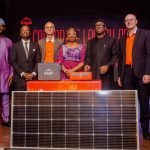
After months of blocked imports, disabled terminals, and a government that openly worried about satellites during an election, Uganda has finally cleared Starlink to operate. On May 15, 2026, Uganda Communications Commission (UCC) Executive Director Nyombi Thembo and Starlink’s Market Access Director for Africa, Ryan Goodnight, signed the MoU and operational licence agreement at State House, Entebbe, while President Yoweri Museveni watched.
It took just under a year of negotiations — and a fairly dramatic few months to get there.
How It Got Messy
New Year’s Day 2026 was not a good morning for Ugandan Starlink users. Starlink killed access to its network across the entire country, following a UCC directive about operating without a valid licence. Every active terminal went dark.
The company’s position was straightforward: it had never officially sold or marketed its services in Uganda. The terminals already in circulation had been activated in Kenya or Rwanda and smuggled in. Technically, those users were already in breach of Starlink’s own terms of service.
But the timing tells a different story. Weeks earlier, in December 2025, Uganda’s customs authority had started blocking Starlink hardware imports unless military clearance was provided. The January 1 shutdown landed two weeks before the country’s general elections. Uganda has a documented history of pulling the internet plug around voting periods, and a satellite service that routes traffic from orbit is considerably harder to shut down than a local ISP. That was the problem.
What Uganda Wanted in Return
When President Museveni posted about the signing on X, he kept it brief: security, revenue assurance, accountability. That is the standard framework most African governments use when licensing telecom operators, and Starlink agreed to work within it.
The stickier issue is Uganda’s Regulation of Interception of Communications Act, which obligates telecom operators to provide government access to communications when legally requested. How exactly Starlink — a company beaming internet from low-Earth orbit — complies with that in practice has not been made public. It is the one unresolved thread in an otherwise clean-looking deal, and other African governments watching this process will want to know how it gets sorted.
The ceremony itself had weight behind it. The US Ambassador to Uganda, William Popp, attended alongside Uganda’s Ambassador to Washington DC, Robbie Kakonge, and Ministry of ICT Permanent Secretary Aminah Zawedde. Popp is due to end his tour of duty shortly, and the Starlink deal appears to be one of his final commercial diplomacy wins in the country.
The Market Starlink Is Walking Into
Uganda’s internet numbers tell you everything about why this deal matters. DataReportal put internet penetration at roughly 22% at the end of 2025, covering about 11.4 million people. Mobile connections stood at 40.9 million, nearly 80% of the population. Most Ugandans have a phone. Far fewer have reliable internet.
Kenya is at 85%. Rwanda is at 60%. Uganda is nowhere close, and most of the gap is in rural areas that fibre companies have little financial incentive to reach.
The existing market is split between MTN Group and Bharti Airtel, two operators that know how to compete on price but have built networks concentrated around population centres. Starlink does not need a tower. That is a genuinely different kind of competition, and both companies know it.
Worth noting: before the formal licence came through, Starlink hardware was already flowing into Uganda informally from Kenya and Rwanda. The December customs crackdown was Kampala’s way of saying the grey market was getting too large to ignore.
Where Uganda Fits in the Bigger Picture
Uganda will be Starlink’s 28th African market, and its third new entry on the continent in 2026 after Senegal and the Central African Republic. The growth is real, but so is the resistance.
Namibia blocked Starlink operations in March. South Africa is still arguing about ownership rules. What Uganda offers is a middle path: a five-year provisional licence with regulatory conditions attached, government oversight built in, no outright ban. The Ministry of ICT gets time to understand the technology; Starlink gets time to figure out the market. It is a cautious deal, but it is a deal.
The Actual Test Starts Now
The licence is the easy part. Rural communities outside Kampala, the ones this deal is supposed to benefit most, cannot get online just because SpaceX and the UCC signed papers.
Starlink’s hardware and subscription costs are still steep against Ugandan income levels. The kit alone prices out most of the households that arguably need the service most. Until that changes, through subsidies, tiered pricing, or some kind of community access model, the gains will likely be concentrated among businesses, institutions, and higher-income urban users who already have decent alternatives.
That is not a reason to dismiss the licence. It is just a reason not to oversell it. Uganda now has the framework. Whether the internet actually reaches the people the press release talked about is a different question, and one that will take at least a year to answer.
















 and then